
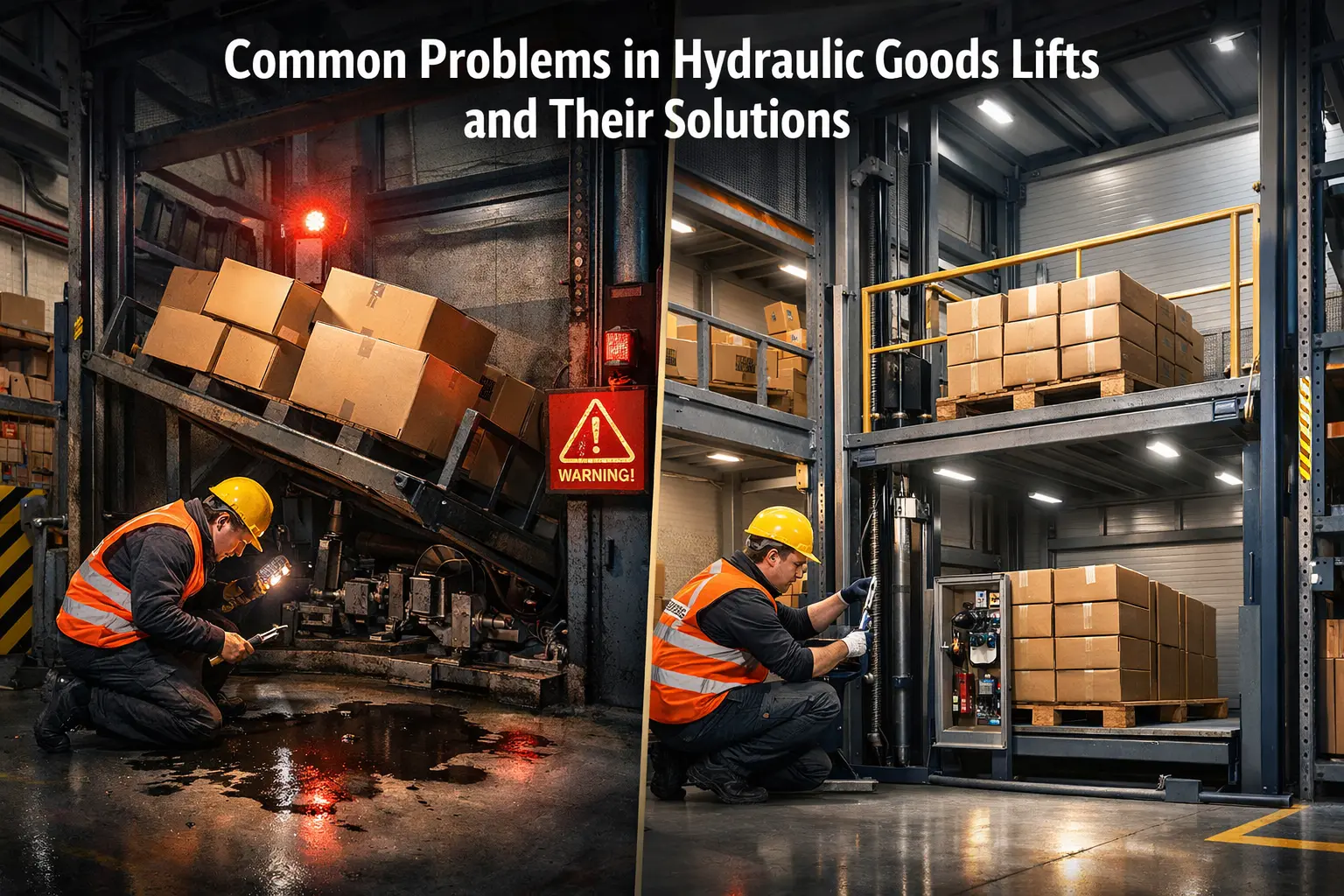
A Hydraulic Good Lift is widely used in factories, warehouses, and industrial facilities to move heavy materials between different floors safely and efficiently. From Warehouse hydraulic goods lift systems to Industrial hydraulic goods lift platforms, these machines play an important role in improving material handling productivity. Many industries also rely on specialized designs such as Goods lift double mast hydraulics or a Double mast goods lift to transport heavy loads with greater stability and lifting capacity.
Despite their durability, hydraulic lifting equipment can develop operational issues over time due to heavy usage, wear and tear, or lack of maintenance. Problems such as hydraulic oil leakage, slow lifting speed, or unusual noise in the system can reduce the efficiency of a Heavy duty hydraulic goods lift. Regular inspection and troubleshooting are essential to maintain the performance of a Hydraulic material handling lift and ensure workplace safety.
Understanding the most common issues that occur in hydraulic lifting systems helps businesses prevent unexpected breakdowns and costly downtime. In this guide, we will discuss the most frequent problems found in hydraulic lifts, their causes, and practical solutions to keep your Industrial hydraulic goods lift operating smoothly and safely for long-term industrial use.
Why Hydraulic Goods Lifts Experience Problems
Hydraulic lifts operate using pressurized fluid to move pistons and lift heavy loads. Continuous operation, heavy loads, and environmental conditions can gradually affect system performance.
Common causes of hydraulic lift problems include:
- Wear and tear of hydraulic components
- Oil contamination
- Improper maintenance
- Electrical control issues
- Overloading or incorrect operation
Over time, key components such as pumps and cylinders can degrade, reducing the efficiency of goods lifts and even causing system failure if not maintained properly.

1. Slow Lifting or Lowering Speed
Problem
One of the most common issues in a Hydraulic Good Lift is slow lifting or lowering speed. This can delay material handling operations and affect productivity.
Slow lift movement often occurs due to hydraulic system inefficiencies or mechanical wear.
Causes
- Low hydraulic oil levels
- Worn hydraulic pump
- Blocked hydraulic valves
- Overloading of the lift platform
Hydraulic lifts may operate slowly when the hydraulic pressure is insufficient to move the load effectively.
Solution
- Check and refill hydraulic oil regularly
- Inspect hydraulic pumps and valves
- Avoid exceeding the recommended load capacity
- Perform periodic maintenance checks
Regular maintenance ensures smooth operation of a Warehouse hydraulic goods lift.
2. Hydraulic Oil Leakage
Problem
Oil leakage is a serious issue that can reduce lifting power and cause environmental hazards.
Hydraulic systems rely on pressurized oil to function properly, so leaks can drastically affect performance.
Causes
- Damaged hydraulic seals
- Cracked hoses or pipes
- Loose fittings
- Worn hydraulic cylinders
Hydraulic oil leakage can also lead to pressure loss and system inefficiency.
Solution
- Replace damaged seals immediately
- Inspect hydraulic hoses regularly
- Tighten fittings and connectors
- Conduct periodic leak testing
Early detection of oil leaks prevents major failures in heavy-duty hydraulic goods lift systems.
3. Unusual Noise During Operation
Problem
Strange noises such as knocking, grinding, or vibrations during operation may indicate internal hydraulic problems.
Causes
- Air entering the hydraulic system
- Contaminated hydraulic oil
- Worn bearings or pump components
Abnormal noise in hydraulic systems often results from air contamination in the hydraulic fluid.
Solution
- Remove air from the hydraulic system
- Replace contaminated oil
- Inspect pumps and moving parts
Ignoring unusual noises may lead to severe damage to a Hydraulic material handling lift.
4. Lift Platform Not Reaching Full Height
Problem
Sometimes the lift platform stops before reaching the required height.
This can disrupt loading and unloading operations in warehouses and factories.
Causes
- Low hydraulic pressure
- Faulty control valves
- Air trapped in hydraulic lines
- Overloaded platform
Solution
- Check hydraulic pressure levels
- Bleed air from hydraulic lines
- Inspect control valves
- Ensure load limits are followed
Proper troubleshooting ensures reliable operation of a Double mast goods lift.
5. Jerky or Uneven Movement
Problem
Jerky or unstable movement is another common issue in hydraulic lifting equipment.
This problem can make the lift unsafe for material handling operations.
Causes
- Lack of lubrication
- Worn mechanical components
- Misalignment in the lift structure
Jerky movement can occur when components are worn or poorly lubricated.
Solution
- Lubricate all moving parts
- Replace worn rollers or bearings
- Inspect and align the lift structure
These steps help maintain smooth movement in Goods lift double mast hydraulics systems.
6. Overheating of Hydraulic System
Problem
Hydraulic systems can sometimes overheat due to excessive pressure or continuous operation.
Overheating reduces system efficiency and may damage internal components.
Causes
- Continuous heavy operation
- Poor ventilation around the hydraulic unit
- Contaminated hydraulic oil
Hydraulic oil may heat quickly when the system is overused or poorly maintained.
Solution
- Allow cooling periods during heavy operation
- Ensure proper ventilation around the hydraulic unit
- Replace old hydraulic oil
Proper temperature control is essential for the longevity of an Industrial hydraulic goods lift.
7. Lift Not Responding to Controls
Problem
Sometimes the lift may not respond when the operator presses the control button.
This issue may stop material handling operations completely.
Causes
- Electrical wiring issues
- Faulty control panel
- Power supply failure
Control panel faults and wiring issues are common causes of hydraulic lift malfunction.
Solution
- Inspect electrical connections
- Repair or replace faulty control switches
- Check the main power supply
Regular electrical inspection ensures smooth operation of a Hydraulic Good Lift.
The right choice ultimately depends on your work environment, load requirements, and budget. By evaluating your operational needs carefully, you can select a lifting solution that improves productivity while maintaining safety standards. Many industries rely on trusted manufacturers like Saideep Industries to ensure they receive efficient and long-lasting lifting equipment tailored to their specific needs.
8. Hydraulic Oil Contamination
Problem
Contaminated hydraulic oil is one of the most serious problems affecting hydraulic systems.
Oil contamination can damage pumps, valves, and cylinders.
Air and water contamination are responsible for a large percentage of hydraulic system failures.
Causes
- Dust and debris entering the oil tank
- Water contamination
- Metal particles from worn components
Solution
- Replace contaminated oil immediately
- Use high-quality filtration systems
- Seal hydraulic tanks properly
Clean hydraulic oil is essential for maintaining a Hydraulic material handling lift.
Preventive Maintenance Tips for Hydraulic Goods Lifts
Preventive maintenance helps avoid major breakdowns and improves equipment lifespan.
Important maintenance practices include:
- Regular inspection of hydraulic components
- Monitoring hydraulic oil levels
- Lubricating moving parts
- Checking electrical controls
- Avoiding overloading
Many industries rely on durable lifting solutions provided by Saideep Industries for safe and efficient material handling operations.
Regular maintenance combined with high-quality lift equipment helps businesses reduce downtime and improve operational efficiency.
Manufacturers such as Saideep Industries design advanced lifting systems to meet the heavy-duty demands of warehouses and industrial facilities.
Conclusion
A Hydraulic Good Lift is an essential tool in modern warehouses, factories, and industrial facilities. It helps businesses move heavy materials efficiently while improving productivity and safety.
However, hydraulic lifting equipment can experience problems such as slow lifting speed, oil leakage, overheating, or control system faults. Understanding these issues and implementing proper maintenance practices can prevent costly breakdowns and extend the lifespan of the equipment.
Whether it is a Double mast goods lift, Industrial hydraulic goods lift, or Heavy duty hydraulic goods lift, regular inspection and timely repairs are crucial for ensuring reliable performance.
By addressing common problems early and following preventive maintenance practices, businesses can ensure that their Hydraulic material handling lift operates smoothly and safely for many years.
FAQs
1. What is a hydraulic goods lift used for?
A hydraulic goods lift is used to transport heavy materials between floors in warehouses, factories, and industrial facilities.
2. What causes hydraulic goods lift failure?
Common causes include oil leakage, contaminated hydraulic fluid, worn components, electrical faults, and overloading.
3. How often should hydraulic goods lifts be serviced?
Hydraulic lifts should be inspected weekly and serviced professionally every 6–12 months depending on usage.
4. What is the advantage of a double mast goods lift?
A Double mast goods lift provides better stability and higher load capacity compared to single mast lifting systems.
5. How can I increase the lifespan of a hydraulic goods lift?
Regular maintenance, proper load handling, oil replacement, and inspection of hydraulic components can extend equipment life.


