A scissor lift hydraulic system is one of the most reliable and widely used lifting solutions in industrial and warehouse environments. Designed to raise heavy loads vertically with stability and precision, hydraulic scissor lifts play a critical role in material handling, assembly lines, maintenance tasks, and storage operations.
Understanding what a hydraulic scissor lift is, how it works, and where it is used helps businesses choose the right equipment and improve workplace efficiency and safety.
What Is a Hydraulic Scissor Lift?
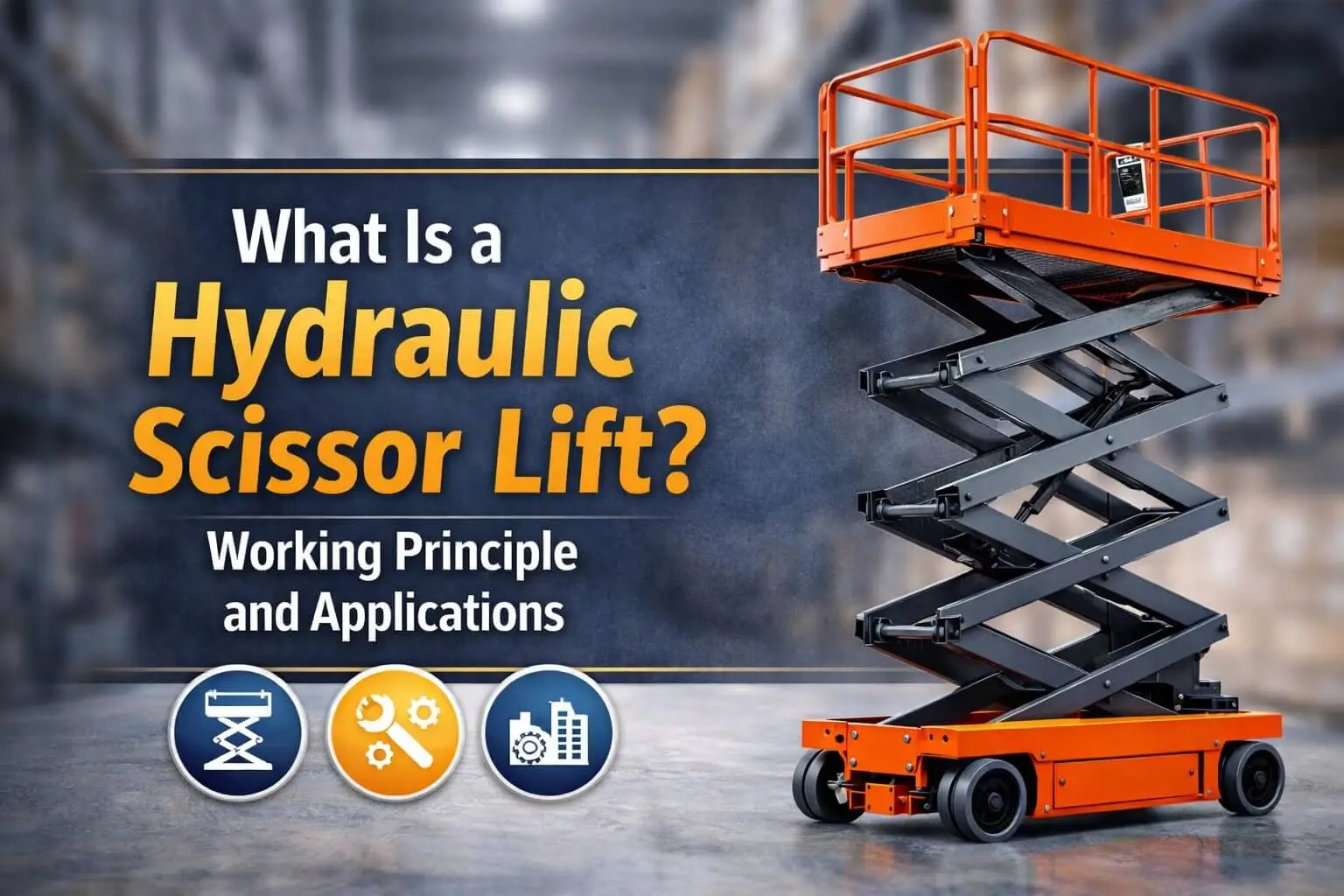
A hydraulic scissor lift is a mechanical lifting device that uses a scissor-shaped metal framework and hydraulic power to lift loads vertically. The crossing metal supports extend and retract in a synchronized motion, providing smooth and controlled elevation.
Unlike cranes or forklifts, a hydraulic scissor lift platform moves strictly in a vertical direction, making it ideal for lifting goods, pallets, or personnel to a specific height with maximum stability. These lifts are commonly found in factories, warehouses, workshops, and logistics centers.
Working Principle of a Scissor Lift Hydraulic System
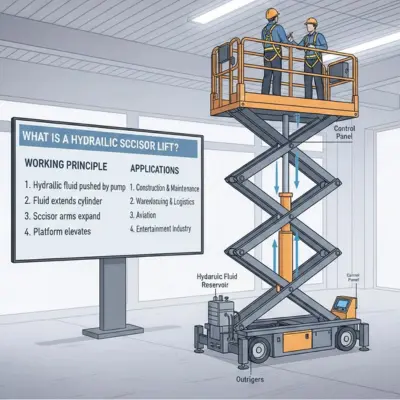
The scissor lift hydraulic system operates on basic hydraulic principles, using pressurized fluid to generate lifting force.
When hydraulic fluid is pumped into a cylinder, it pushes a piston upward. This piston action forces the scissor arms to expand, raising the lift platform. When the pressure is released, the fluid flows back into the reservoir, and the platform descends smoothly under controlled conditions.
Key components of the system include:
- Hydraulic pump
- Hydraulic cylinder
- Scissor arms
- Control valves
- Lift platform
This simple yet powerful mechanism allows a hydraulic scissor lift table to handle heavy loads with minimal effort while maintaining balance and safety.
Types of Hydraulic Scissor Lifts
Manual Hydraulic Scissor Lift
A manual hydraulic scissor lift uses a foot pump or hand lever to pressurize the hydraulic system. It is cost-effective, easy to operate, and ideal for light-duty applications in small workshops.
Industrial Hydraulic Scissor Lift
An industrial hydraulic scissor lift is built for heavy-duty operations and frequent usage. These lifts handle higher load capacities and are commonly used in manufacturing plants and industrial warehouses.
Warehouse Hydraulic Scissor Lift
A warehouse hydraulic scissor lift is designed for pallet handling, order picking, and loading operations. It improves vertical storage efficiency and reduces manual labor.
Key Advantages of Hydraulic Scissor Lifts
One of the biggest advantages of a hydraulic scissor lift table is its stability. The scissor structure evenly distributes weight, reducing the risk of tipping or imbalance.
Other benefits include:
- High load-lifting capacity
- Smooth vertical movement
- Low maintenance requirements
- Improved worker safety
- Efficient use of vertical space
Compared to other lifting equipment, hydraulic scissor lifts offer excellent durability and long service life.
Applications of Hydraulic Scissor Lifts
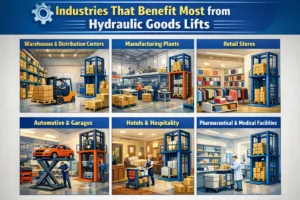
Manufacturing Units
In factories, hydraulic scissor lifts are used for machine loading, assembly operations, and positioning heavy components at ergonomic heights.
Warehouses and Logistics
A warehouse hydraulic scissor lift helps in stacking pallets, loading trucks, and managing inventory at different height levels.
Automotive Workshops
Scissor lifts are commonly used to raise vehicles for inspection, repair, and maintenance.
Construction and Maintenance
Hydraulic scissor lift platforms are used for indoor maintenance work, electrical installations, and material positioning.
Retail and Commercial Spaces
These lifts assist in shelving, stock replenishment, and display installations.
Safety Features and Operational Considerations
Safety is a major reason why many industries prefer hydraulic scissor lifts. Most models include overload protection, emergency stop systems, and controlled descent valves.
Operators should always:
- Check load capacity before use
- Ensure even load distribution
Inspect hydraulic components regularly - Follow proper operating guidelines
Reliable manufacturers like Saideep Industries focus on quality engineering and safety compliance, ensuring dependable performance in demanding environments.
Factors Affecting Hydraulic Scissor Lift Price
The hydraulic scissor lift price varies based on several factors:
- Load capacity
- Lift height
- Platform size
- Manual or powered operation
- Build quality and safety features
While lower-priced models may seem attractive, investing in a high-quality lift ensures better durability, lower maintenance costs, and improved safety over time.
Choosing the Right Hydraulic Scissor Lift
Selecting the right lift depends on application requirements, available space, and load handling needs. Businesses should evaluate current operations and future expansion before purchasing.
Working with experienced manufacturers such as Saideep Industries ensures expert guidance, customization options, and dependable after-sales support.