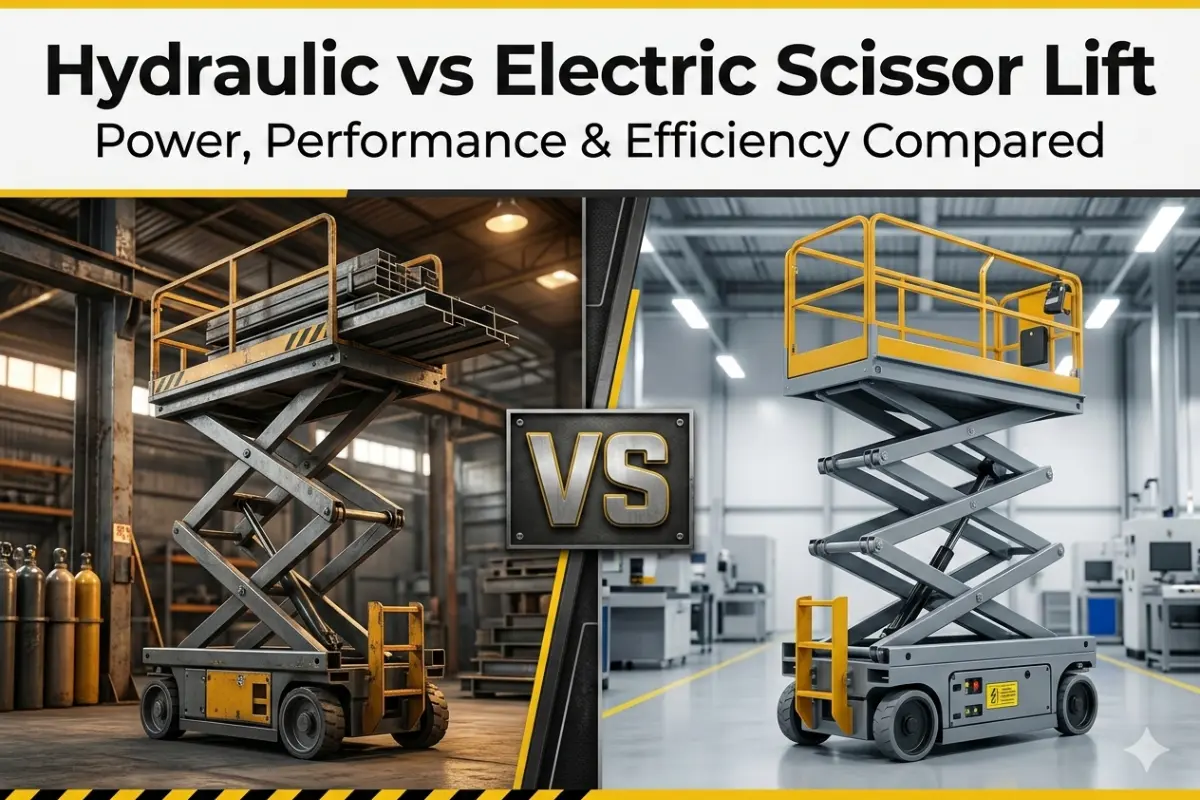
Choosing the right lifting equipment is essential for improving safety, productivity, and efficiency in industrial environments. When comparing a hydraulic scissor lift and an electric scissor lift, businesses often struggle to decide which one best suits their operational needs. Both lifting systems are widely used in warehouses, manufacturing units, logistics centers, and maintenance applications. However, their working mechanisms, power sources, and ideal use cases are quite different.
A scissor lift hydraulic system is known for its strong lifting capacity and smooth vertical movement, making it suitable for heavy-duty industrial tasks. On the other hand, an electric scissor lift is preferred for cleaner, quieter operations, especially in indoor environments where emissions and noise need to be minimized.
In this guide, we will compare both options in detail, helping you understand their advantages, limitations, and ideal applications so you can make an informed decision for your workplace.
Understanding Hydraulic Scissor Lift Platforms
A hydraulic scissor lift platform operates using hydraulic cylinders that generate lifting force through pressurized fluid. This design allows the platform to lift heavy loads with stability and precision. These lifts are commonly used in factories, warehouses, loading docks, and workshops where heavy materials need to be moved vertically.
Hydraulic lifts are often available in different configurations, including a mobile scissor lift table, double scissor lift table, and scissor lift table trolley, depending on the lifting height and mobility requirements.
Key Benefits of Hydraulic Scissor Lifts
- High load capacity for heavy materials
- Smooth and stable lifting motion
- Durable design suitable for industrial environments
- Lower initial investment compared to electric models
- Minimal electronic components, reducing maintenance complexity
Hydraulic systems are particularly useful for industries that require frequent heavy lifting and reliability over long operational hours.
Understanding Electric Scissor Lifts
An electric scissor lift uses an electric motor and battery-powered system to raise and lower the platform. These lifts are commonly used in indoor facilities where zero emissions, low noise, and compact movement are essential.
Electric lifts are designed for efficiency and precision. They are ideal for maintenance work, installation tasks, and warehouse operations where maneuverability is a priority.
Key Benefits of Electric Scissor Lifts
- Environment-friendly and emission-free operation
- Quiet performance for indoor use
- Lower long-term energy costs
- Smooth control and precision positioning
- Reduced hydraulic fluid maintenance
Because of these advantages, electric lifts are increasingly popular in modern facilities focusing on sustainability and clean energy solutions.
Hydraulic Scissor Lift vs. Electric Scissor Lift: Major Differences
1. Power Source
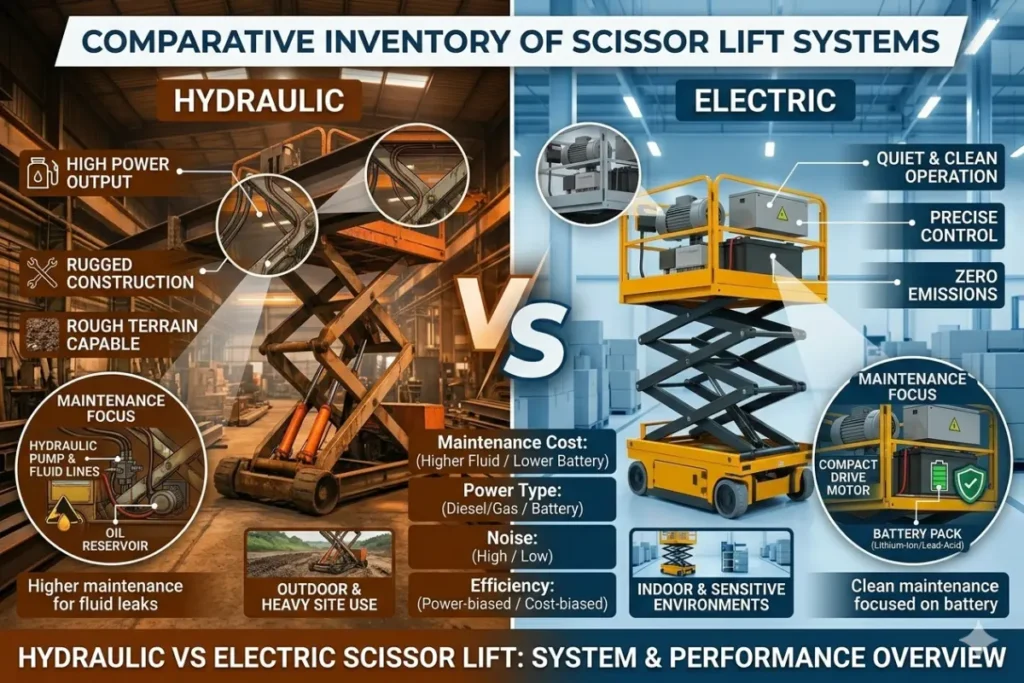
A scissor lift hydraulic relies on hydraulic oil pressure, while electric lifts run on rechargeable batteries. Hydraulic systems provide strong lifting force, whereas electric systems prioritize efficiency and eco-friendly operation.
2. Load Capacity
Hydraulic lifts generally offer higher load capacity, making them suitable for heavy industrial operations. Electric lifts are better suited for medium-duty tasks and personnel lifting.
3. Mobility and Flexibility
A mobile scissor lift platform or scissor lift table trolley powered hydraulically can be moved easily across industrial floors. Electric lifts also offer mobility but are often designed for smoother surfaces and indoor environments.
4. Maintenance
Hydraulic systems may require periodic checks for oil levels and seals. Electric lifts require battery maintenance and charging schedules but involve fewer fluid-related issues.
5. Cost Considerations
Hydraulic lifts usually have a lower upfront cost, while electric lifts may save money in the long run due to energy efficiency and reduced maintenance.
Applications of Hydraulic and Electric Scissor Lifts
Hydraulic Scissor Lift Applications
- Heavy material handling
- Loading and unloading trucks
- Manufacturing assembly lines
- Automotive workshops
- Warehouses requiring high load capacity
Hydraulic systems like a double scissor lift table are especially useful when greater lifting height is needed without sacrificing stability.
Electric Scissor Lift Applications
- Indoor maintenance work
- Retail and commercial spaces
- Warehousing with clean floor environments
- Electrical and installation projects
- Lightweight lifting tasks
Both types can be customized according to industry requirements, ensuring operational efficiency and worker safety.
Which One Should You Choose?
The choice between a hydraulic scissor lift and an electric scissor lift depends mainly on your operational needs.
Choose a hydraulic scissor lift if:
- You need to lift heavy loads regularly.
- Your operations involve industrial or outdoor environments
- Durability and high strength are priorities.
Choose an electric scissor lift if:
- You operate mainly indoors.
- You need quiet and emission-free equipment.
- Energy efficiency and precision are important.
Many businesses prefer hydraulic models for heavy-duty performance, while electric lifts are ideal for modern facilities focusing on sustainability and cleaner operations.
Safety and Efficiency Considerations
Regardless of the type, safety should always be a top priority. Ensure that lifts are operated by trained personnel and maintained according to manufacturer guidelines. Features like anti-slip platforms, emergency stop buttons, and overload protection significantly enhance operational safety.
Companies like Saideep Industries provide reliable lifting solutions designed to meet industrial standards while ensuring user safety and long-term performance. Choosing quality equipment can reduce downtime and improve workplace productivity.
Final Verdict
Both hydraulic and electric scissor lifts have their own strengths. A hydraulic scissor lift platform is best for heavy-duty industrial use, offering durability and powerful lifting capability. Meanwhile, electric scissor lifts excel in clean, indoor environments where quiet operation and energy efficiency are required.
The right choice ultimately depends on your work environment, load requirements, and budget. By evaluating your operational needs carefully, you can select a lifting solution that improves productivity while maintaining safety standards. Many industries rely on trusted manufacturers like Saideep Industries to ensure they receive efficient and long-lasting lifting equipment tailored to their specific needs.
FAQs
1. What is the main difference between a hydraulic and electric scissor lift?
A hydraulic lift uses fluid pressure for lifting, while an electric lift uses battery-powered motors for operation.
2. Which scissor lift is better for heavy loads?
Hydraulic scissor lifts are generally better for heavy-duty lifting applications.
3. Are electric scissor lifts suitable for outdoor use?
They can be used outdoors, but they are primarily designed for indoor environments with smooth surfaces.
4. What is a mobile scissor lift table used for?
A mobile scissor lift table is used for transporting and lifting materials safely within industrial or warehouse settings.
5. Is a double scissor lift table better than a single scissor lift?
A double scissor lift table provides greater lifting height while maintaining stability, making it ideal for higher elevation tasks.