Choosing the right hydraulic goods lift is a critical decision for industrial facilities that handle heavy materials across multiple floors. The right lift improves productivity, enhances safety, and reduces long-term operational costs, while the wrong choice can lead to inefficiency, downtime, and safety risks.
With multiple configurations, load capacities, and design options available, businesses must carefully evaluate their requirements before investing in a hydraulic goods lift. This guide explains the key factors to consider when selecting the right solution for industrial use.
Understand Your Load Requirements
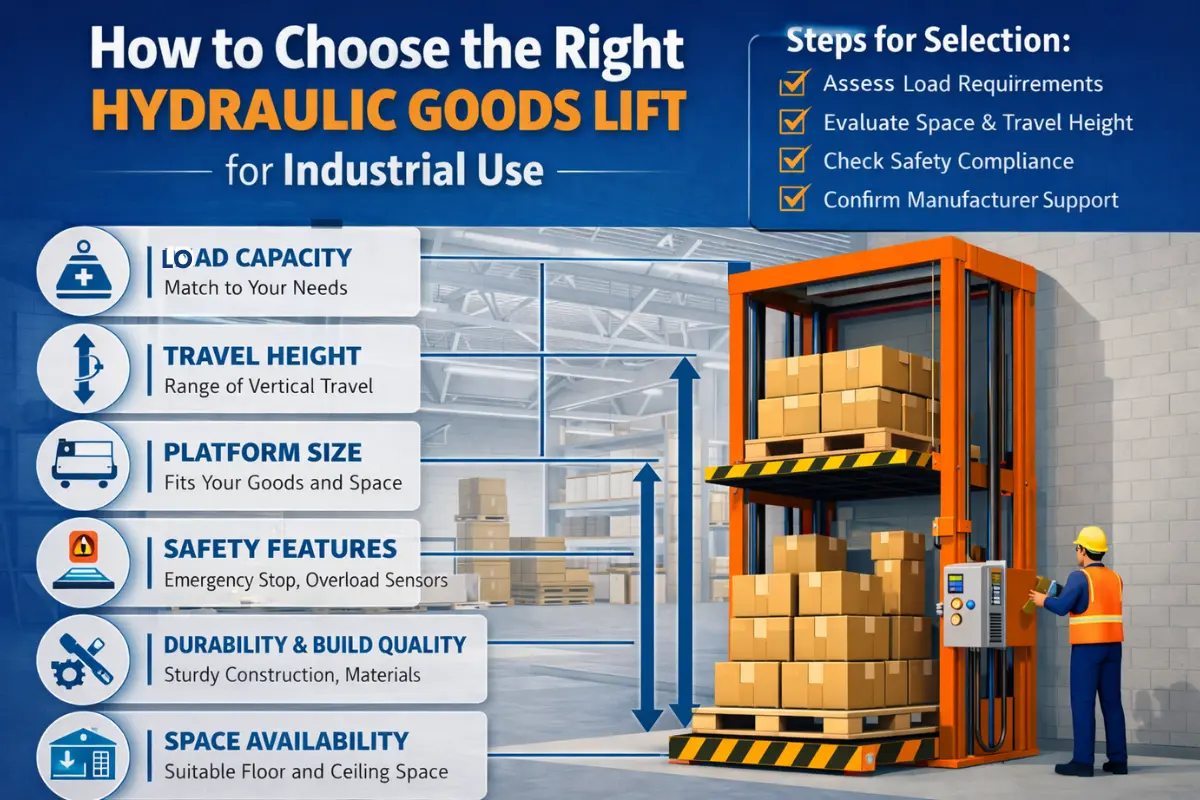
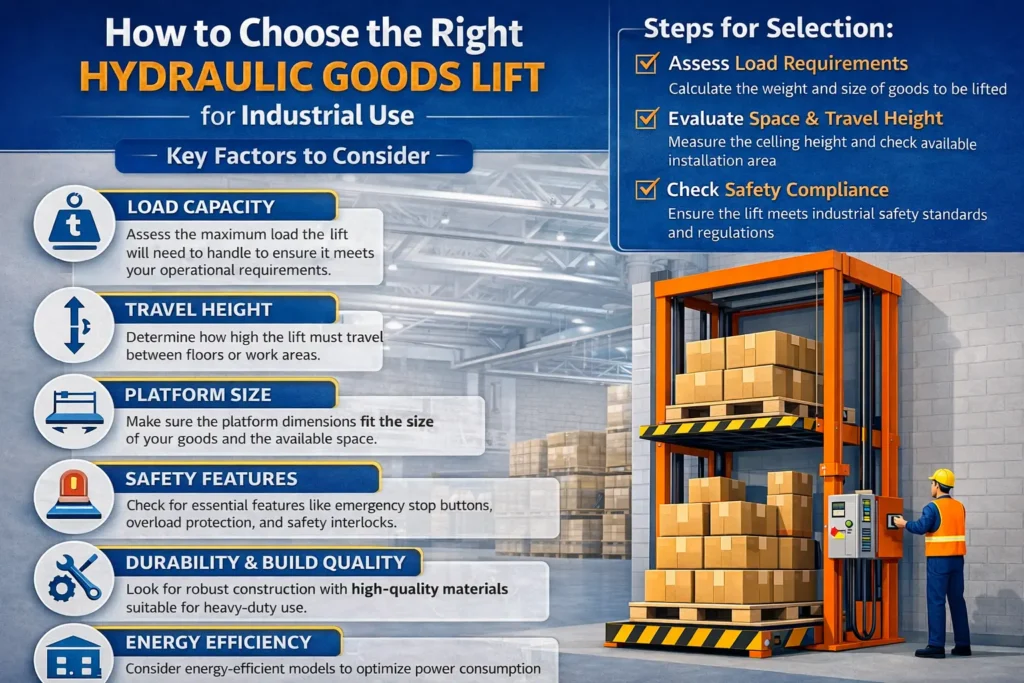
The first step in choosing a hydraulic goods lift is determining the maximum load it needs to handle. This includes the weight of goods, pallets, containers, and any lifting accessories.
An industrial hydraulic goods lift should always be selected with a safety margin above the maximum expected load. For facilities handling very heavy or uneven loads, a heavy duty hydraulic goods lift is the best choice, as it is designed for continuous operation and higher stress conditions.
Hydraulic goods lifts are preferred across industries due to their
- High load capacity
- Smooth and controlled lifting
- Simple design and low maintenance
- Customizable platform sizes
- Long service life
Reputable manufacturers like Saideep Industries focus on robust engineering and safety standards, making hydraulic goods lifts a dependable choice for industrial use.
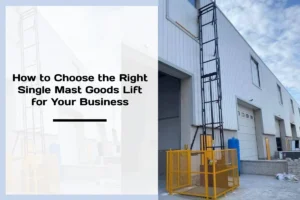
Decide Between Single-Mast and Double-Mast Systems
One of the most important structural decisions is choosing between a single mast and a double mast goods lift.
- Single mast lifts are suitable for lighter loads and smaller platforms.
- Goods lift double mast hydraulics provide better balance, higher load capacity, and improved stability, especially for wide or heavy loads.
For industrial environments where safety and load consistency are critical, double mast systems are often preferred.
Evaluate Lift Height and Travel Distance
Lift height plays a major role in determining the right hydraulic goods elevator. You should measure the total vertical distance between floors and consider future expansion.
A hydraulic goods elevator with insufficient lift height can limit operational efficiency, while an oversized system may increase costs unnecessarily. Selecting the correct lift height ensures smooth and efficient material movement without overengineering.
Consider Platform Size and Design
Platform size should match the dimensions of the goods being transported. A well-designed hydraulic material handling lift allows safe placement of loads without overhang or imbalance.
Platform features to consider include:
- Anti-skid surface
- Load retaining rails
- Custom dimensions for pallets or machinery
A properly sized platform reduces handling time and improves operator safety.
Assess Frequency of Use
How often the lift will be used significantly impacts the type of system required. Occasional lifting tasks may be handled by standard models, but high-frequency operations demand robust systems.
A warehouse hydraulic goods lift used for daily loading and unloading requires durable hydraulic components and reinforced structures. For continuous industrial use, investing in a high-quality system reduces maintenance and downtime.
These lifts are especially useful for moving heavy cartons and display materials without disturbing customers or staff.
Safety Features and Compliance
Safety should never be compromised when choosing a hydraulic goods lift. Industrial lifts must comply with applicable safety standards and include essential safety mechanisms.
Key safety features include:
- Overload protection
- Emergency stop buttons
- Controlled descent valves
- Guide rails and safety locks
Reputed manufacturers like Saideep Industries focus on strict quality control and safety compliance, ensuring reliable performance in demanding environments.
Installation Space and Site Conditions
Before finalizing a hydraulic goods lift, evaluate the available installation space. Factors such as pit depth, headroom, shaft dimensions, and floor strength directly affect system design.
Hydraulic goods lifts are flexible and can be installed in locations where traditional elevators are not feasible, making them ideal for retrofitting existing industrial buildings.
Maintenance and Long-Term Reliability
Maintenance requirements vary depending on lift design and usage intensity. A well-engineered hydraulic goods lift requires minimal maintenance but still needs regular inspections.
Businesses should consider:
- Availability of spare parts
- Ease of servicing
- Manufacturer support
Choosing a reliable supplier like Saideep Industries ensures long-term service support and reduced operational disruptions.
Energy Efficiency and Operating Costs
Hydraulic goods lifts are generally energy-efficient, especially for low-to-medium-rise applications. They consume power mainly during upward movement, making them cost-effective for industrial use.
Evaluating long-term operating costs helps businesses balance initial investment with lifecycle value.
Customization for Industrial Applications
Every industrial facility has unique requirements. Customization options such as platform size, load capacity, lift height, and control systems allow businesses to tailor the lift to their workflow.
A customized hydraulic material handling lift integrates seamlessly into operations, improving efficiency and safety.